
Why Your Association Chapter Needs a Professional Operations Partner — Not Just More Volunteers. By Wendy Palmer | Founder & Principal Event Strategist, Eventure Enterprises
Every chapter board starts with the same energy. Motivated volunteers step into leadership roles with genuine enthusiasm — they want to grow the chapter, deliver value to members, and build something they're proud of. And then reality sets in.
The registrations don't manage themselves. The speaker coordination emails don't write themselves. The sponsor deliverables don't fulfill themselves. The board minutes don't take themselves.
Within a few months, the volunteer who signed up to lead strategy is spending twenty hours a week on logistics. The chapter president who wanted to build member relationships is instead chasing down nametag lists and website updates. The board that was supposed to be thinking about the chapter's future is instead trying to get through this month's event without something falling through the cracks.
This is not a failure of dedication. It is a structural problem. And it has a structural solution.
The Hidden Cost of Volunteer-Operated Administration
Association chapters are built on volunteer leadership — and that is one of their greatest strengths. Members who step into board roles bring passion, industry expertise, and peer credibility that no paid staff can replicate.
But volunteer leadership has natural limits. Most board members hold full-time professional positions. They joined the chapter because of the industry connections, the professional development, and the sense of community. They did not sign up to become part-time administrative professionals.
When operational demands consume board members' time and energy, several things happen simultaneously:
Board member burnout increases, and retention drops. The chapter struggles to recruit new volunteers because the reputation of the role is exhausting. Event quality suffers when the people executing the logistics are the same people who should be focusing on the attendee experience and strategic programming. Membership engagement declines when communications are inconsistent, events feel disorganized, or the chapter simply goes quiet between programs.
The real cost of under-resourced chapter operations is not a line item on a budget — it is the gradual erosion of the chapter's reputation and the slow departure of its most engaged members.
What Professional Chapter Support Actually Looks Like
The Chapter Office exists to solve this problem. Not by replacing volunteer leadership, but by removing the operational burden that prevents volunteer leaders from doing what they signed up to do.
Think of it as the operational infrastructure behind your board. The professional layer that ensures registrations are processed, communications go out on time, sponsors receive what they were promised, speakers are properly briefed and coordinated, and social media stays active and on-brand.
Board members remain the face and voice of the chapter. They set direction, build relationships, and represent the organization's values. The Chapter Office handles the execution that keeps every commitment the board makes.
This model works because it separates two fundamentally different types of work: strategic leadership, which requires industry expertise and relational trust that only volunteers can provide — and operational management, which requires process discipline, responsiveness, and professional systems that most volunteer boards simply cannot sustain consistently.
Why Built from the Inside Matters
The Chapter Office was created by Wendy Palmer — a former GBTA Chapter President who has held nearly every volunteer leadership role a chapter has to offer. She has chased the registrations, written the board minutes, coordinated the speakers, and fielded the membership inquiries.
She built The Chapter Office because she understood, from direct experience, exactly what chapter leaders actually need — and what a generic administrative service or marketing agency would miss entirely.
The difference is not just familiarity with the work. It is understanding the culture of association chapters: the volunteer dynamics, the sponsor relationships, the membership expectations, the unwritten norms that determine whether a chapter feels like a professional community or a well-meaning but disorganized group.
When a chapter works with The Chapter Office, they are not onboarding a vendor. They are adding a team member who already understands the environment they are walking into.
The Right Support for Where Your Chapter Is
Not every chapter needs the same level of support. Some boards are running well and simply need help with social media consistency and event registration management. Others are dealing with a leadership transition and need comprehensive operational coverage while the incoming board gets oriented. Some chapters want to expand their programming but don't have the operational bandwidth to support it without something else suffering.
The Chapter Office offers flexible support at three levels — from foundational essentials to full executive office coverage — as well as individual a la carte services for chapters that need support in a specific area without a broader engagement.
The goal is always the same: give your board their time back so they can focus on the work that only they can do.
A Question Worth Asking
If you are a chapter leader reading this, there is one question worth sitting with: how much of your board's current energy is going toward things that genuinely require your leadership — and how much is going toward operational tasks that a professional support partner could handle better, faster, and more consistently than a rotating volunteer team?
The answer to that question is often the beginning of a real conversation about what your chapter could become with the right infrastructure behind it.
If you'd like to talk through what that looks like for your specific chapter, Eventure Enterprises would be glad to have that conversation.
Wendy Palmer is the Founder & Principal Event Strategist at Eventure Enterprises and the creator of The Chapter Office. She is a former GBTA Chapter President with 25+ years of association and corporate event leadership experience.
To learn more about The Chapter Office or schedule a discovery conversation, visit eventureenterprises.com or chat with Gunner, our AI concierge, at eventureenterprises.com?chat=open.
Your Social Media Isn't a Marketing Problem. It's an Operations Problem. By Mark Camerire | Chief Operating Officer, Eventure Enterprises
Most organizations that struggle with social media consistency don't have a strategy problem. They have a bandwidth problem. And bandwidth problems don't get solved by better content ideas — they get solved by better systems.
I say this as someone who has spent 25 years building operational infrastructure for complex service organizations, and who now runs the content engine behind Eventure Enterprises' digital presence work. The organizations we work with aren't short on things to say. They have expertise, they have stories, they have genuine value to communicate. What they don't have is the operational capacity to translate that value into consistent, on-brand content across multiple platforms, week after week, without it becoming a full-time job.
That gap — between what an organization could be saying and what it is actually saying — is where most digital presence strategies break down.
Why Consistency Is the Only Metric That Matters First
Before engagement rates, before follower counts, before any other metric — consistency is the foundation that everything else is built on.
A brand that posts three times this week and disappears for the next three weeks is not building a digital presence. It is demonstrating, publicly and repeatedly, that social media is not a priority. Audiences notice the silence. Algorithms penalize it. Competitors fill the space.
Consistency does not require posting constantly. It requires posting reliably — the same platforms, with the same voice, on a rhythm your audience can count on. Three posts a week, every week, will outperform five posts one week and nothing for the next two in every meaningful way.
The challenge is that consistent execution requires systems, not willpower. Organizations that rely on someone remembering to post will always struggle with consistency. Organizations that build a process — a content calendar, an approval workflow, an automated publishing infrastructure — execute reliably regardless of how busy the week gets.
The AI Content Engine: What It Is and What It Isn't
At Eventure, we built a proprietary AI-powered content engine that handles the operational side of digital presence management for our clients. It is worth being specific about what this means, because the term "AI content" carries a lot of assumptions — some accurate, most not.
The engine does not generate generic content and post it automatically. That would produce exactly the kind of hollow, off-brand output that erodes audience trust faster than silence does.
What it does is this: every client has a detailed brand voice profile — their tone, their audience, their key messages, their language rules, their platform-specific requirements. The AI generates content calibrated to that profile, in that voice, for that specific audience. Our team reviews the output, applies strategic judgment, and queues it through an automated scheduling system that publishes at the right time on the right platform.
The result is content that sounds like the organization — because it is built on a deep understanding of who the organization is — produced at a consistency and volume that no manual team could sustain without significant resources.
LinkedIn, Facebook, and Instagram — Each One Different
One of the most common mistakes organizations make is treating social platforms as interchangeable channels for the same content. They are not.
LinkedIn is a professional network where thought leadership, industry insight, and credibility-building content perform best. The audience is making professional assessments — of your expertise, your judgment, your relevance to their work. Content that performs on LinkedIn tends to be substantive, direct, and specific. Short hook, clear point, earned credibility.
Facebook is a community platform where reach, visibility, and conversation drive value. The same message that works on LinkedIn often needs to be reframed — warmer, more accessible, with a clearer call to action. Video and event promotion tend to outperform text-heavy content.
Instagram is a visual storytelling platform. The image or graphic carries most of the weight. Copy is shorter, the tone is more human, and the goal is emotional resonance as much as information transfer.
Managing these three platforms well means producing three meaningfully different versions of your message, consistently, every week. That is where the operational complexity compounds — and where a system built for it becomes essential.
What Consistent Digital Presence Actually Produces
The organizations that invest in consistent, strategic social media management over twelve to eighteen months see a pattern of outcomes that compounds over time.
Thought leadership builds. When a professional consistently publishes insightful content on LinkedIn, they become associated with that domain in their network's mind. Opportunities — speaking invitations, partnership inquiries, prospect conversations — begin to arrive rather than needing to be chased.
Brand credibility deepens. A consistent, professional social presence signals organizational health. Prospects who research a company before a first conversation are forming impressions before anyone picks up the phone. A strong, active presence shapes those impressions favorably.
Event and program promotion amplifies. For organizations that run events, a well-managed social presence creates a promotional engine that drives registrations, builds pre-event buzz, and extends the life of the event through post-event content and recaps.
Recruitment and retention benefit. Employees and prospective hires pay attention to how an organization presents itself externally. A strong digital presence communicates organizational investment, professionalism, and momentum.
None of these outcomes happen from a single post or a good week. They accumulate from consistent execution over time — which is precisely why the operational foundation matters more than any individual piece of content.
The Operational Question Behind the Strategy Question
When an organization asks us about digital presence strategy, we always work backward from one question: what does reliable execution actually require, and does this organization currently have that capacity?
The answer shapes everything — the tier of support they need, the platforms we prioritize, the content mix that is sustainable given their team's bandwidth for review and feedback.
Strategy without operational capacity is a plan that never gets executed. Operational capacity without strategy produces activity without direction. The combination of both — a clear strategic framework and the systems to execute it consistently — is what actually moves the needle.
If your organization's digital presence is not where it should be, the first question is not "what should we be posting?" It is "what would it take to post reliably, every week, in a way that represents this organization the way it deserves to be represented?"
That is the question The Chapter Office — and Eventure's digital presence practice — is built to answer.
Mark Camerire is the Chief Operating Officer of Eventure Enterprises and the architect of its AI-powered content engine. He is a U.S. Army Veteran with 25+ years of enterprise operations and program management experience.
To learn more about Eventure's Digital Presence & Social Strategy services, visit eventureenterprises.com or chat with Gunner at eventureenterprises.com?chat=open.
Trade Shows Don't Generate ROI. Trade Show Strategy Does. By Wendy Palmer | Founder & Principal Event Strategist, Eventure Enterprises
Every year, organizations invest tens of thousands of dollars in trade show participation — booth space, travel, staffing, materials, sponsorships — and walk away with a badge scanner full of contacts, a tired team, and a nagging question: was that worth it?
For many organizations, the honest answer is: not as much as it should have been.
Not because trade shows don't work. They do. In-person industry gatherings remain among the highest-value business development opportunities available — the density of relevant relationships, the access to decision-makers, and the compressed timeline for conversations that would otherwise take months to schedule are genuinely difficult to replicate through any other channel.
The problem is not the trade show. The problem is the approach most organizations bring to it.
The Difference Between Attending and Executing
There is a meaningful distinction between showing up to a trade show and executing at one. Most organizations show up. Very few execute.
Showing up means booking the booth, shipping the materials, staffing the floor, collecting leads, and flying home. It is not without value. But it is far below what the investment deserves to produce.
Executing means treating the trade show as a strategic program — with defined objectives, a pre-show outreach strategy, a prepared and briefed team, a meeting agenda built before the event begins, and a post-show follow-up system that converts floor conversations into real opportunities.
The difference between these two approaches is not primarily budget. It is preparation and process.
The Week Before the Show
The most important work in trade show strategy happens before the show floor opens.
Most organizations spend the week before a show finalizing logistics — confirming booth shipments, reviewing the floor layout, making sure the team knows where to be and when. That is necessary, but it is not sufficient.
The organizations that consistently generate strong trade show ROI spend that same week doing something different: building their meeting agenda.
They have identified every prospect, client, and partner who is attending the show. They have sent personalized outreach — not generic "we'll be at booth 412" emails, but specific messages that reference shared context and offer a clear reason to connect. They have pre-scheduled meetings during the show hours when floor traffic is slower, so their team is not spending prime time in idle conversations with low-probability contacts.
By the time the show opens, the best-prepared teams already have fifteen to twenty confirmed meetings on the calendar. The show floor becomes a venue for executing a pre-built agenda, not a place to wander and hope.
What Your Team Needs to Know Before They Walk In
A prepared team is a productive team. An unprepared team is an expensive one.
Every person staffing a trade show booth should be able to answer five questions fluently before the event begins: What problem does our organization solve? Who is our ideal client or partner, and what does a conversation with them look like? What do we want the person walking away from our booth to remember? What is our call to action — what do we want them to do next? Who are the three to five most important relationships we want to deepen or initiate at this specific show?
These questions sound basic. The reality is that many organizations staff trade shows with team members who have not had a structured conversation about any of them before they walk onto the floor. The result is inconsistent messaging, missed opportunities, and conversations that generate enthusiasm in the moment but no action afterward.
Preparation is not complicated. But it requires intentionality — and often a facilitated process to ensure it actually happens.
The Post-Show Window
The forty-eight to seventy-two hours after a trade show are the most underutilized window in trade show strategy.
Contacts are still thinking about the show. Conversations are still fresh. The relationships that were initiated on the floor are at their most accessible — and their most fragile. A thoughtful follow-up in that window can convert a promising introduction into a real next step. The same follow-up sent two weeks later, after the contact has returned to their normal workload and the show is a distant memory, rarely achieves the same result.
The organizations that execute post-show follow-up well do not improvise it. They have a follow-up framework built before the show begins: a tiered approach based on the quality and intent of each conversation, personalized messages that reference what was actually discussed, and a clear path to whatever the next step is — a call, a proposal, an introduction, a demo.
The leads in the badge scanner are not the ROI. The conversations that happen after the show are.
Trade Show Strategy as Part of a Broader Program
The most effective trade show programs are not treated as standalone events. They are integrated into a broader business development strategy — with pre-show content on LinkedIn and other channels that builds awareness and sets the stage for on-site conversations, event-synchronized social coverage during the show, and post-event content that extends the life of the investment beyond the three days on the floor.
This integration is something we think about carefully at Eventure — because we work at the intersection of event strategy and digital presence. The same team that helps an organization plan and execute their trade show strategy also manages the content engine that amplifies it before, during, and after.
The result is a trade show program that produces impact well beyond what the floor itself can deliver in isolation.
What Strong Trade Show ROI Actually Looks Like
Trade show ROI is rarely immediate. The relationships initiated on a show floor rarely convert in the same quarter. The organizations that measure trade show success by immediate pipeline generated will almost always be disappointed.
Strong trade show ROI looks like this: a pipeline that traces back to show-floor introductions, client relationships that deepened through in-person connection, partnerships that emerged from a conversation that would never have happened through cold outreach, and a brand presence that registered with the right audience at the right moment.
These outcomes take time to materialize — but they are real, they are durable, and they are almost impossible to generate through digital-only engagement.
The trade show investment is worth making. The strategy to get the most out of it is worth building.
Wendy Palmer is the Founder & Principal Event Strategist at Eventure Enterprises, with 25+ years of experience designing and executing trade show and conference programs for national and global organizations.
To discuss your trade show strategy, visit eventureenterprises.com or chat with Gunner at eventureenterprises.com?chat=open.
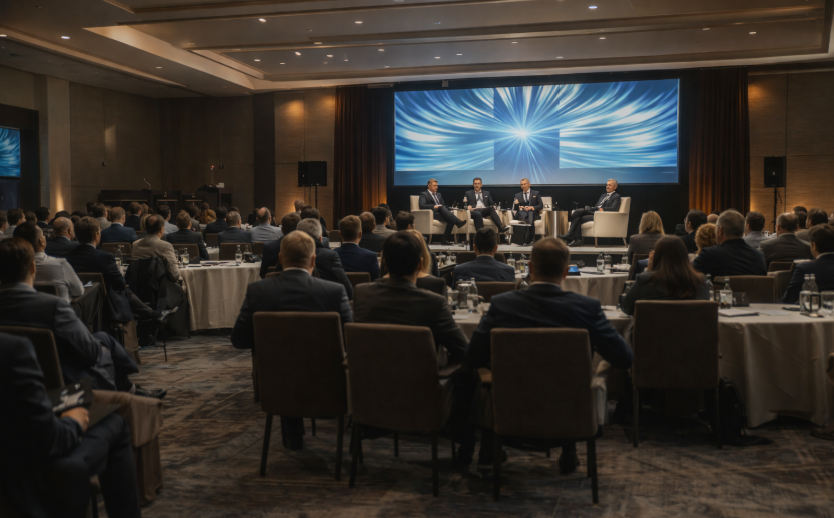
Why Strategic Corporate Events Drive Real Business Impact
Corporate events have the potential to be far more than networking opportunities or annual gatherings. When designed intentionally, strategic corporate events become powerful tools for strengthening leadership alignment, driving innovation, and delivering measurable business outcomes.
At Eventure Enterprises, we believe events should never exist simply for the sake of gathering people in one place. The most successful organizations use conferences, executive forums, leadership retreats, and strategic off-sites to reinforce company vision, inspire collaboration, and move initiatives forward.
When thoughtfully planned and professionally executed, corporate events become catalysts for real business transformation.
Strategic Events Strengthen Leadership Alignment
One of the most valuable outcomes of a well-designed corporate event is the opportunity it creates for leadership alignment.
In fast-moving organizations, leaders are often pulled in multiple directions. Daily operational demands can make it difficult for executives and senior managers to step back and focus on long-term strategy. Corporate conferences and executive leadership forums create a dedicated environment where leaders can reconnect with the organization’s broader goals.
These events provide space for:
Strategic planning discussions
Leadership collaboration
Alignment on company priorities
Evaluation of current initiatives
Development of future roadmaps
By bringing key decision makers together in a focused setting, organizations can ensure that leadership teams remain unified around vision, strategy, and execution.
Corporate Conferences Drive Executive Engagement
Engaged leaders are essential for organizational success. Strategic corporate events help foster that engagement by creating immersive environments designed for meaningful participation.
Unlike routine meetings or virtual calls, well-planned conferences and leadership retreats encourage deeper discussion and collaboration. Structured sessions, moderated panels, and interactive workshops create opportunities for executives to exchange ideas, challenge assumptions, and explore new perspectives.
This level of engagement is especially important for:
Executive leadership teams
Board-level discussions
Strategic planning sessions
Cross-department collaboration
When leaders actively participate in strategic events, they leave with renewed focus, clearer priorities, and stronger alignment with the organization’s direction.
Events Create Space for Innovation and Collaboration
Innovation rarely happens in isolation. It often emerges from conversations, shared insights, and collaborative problem solving.
Corporate events create the perfect environment for these interactions.
When employees, leadership teams, and industry partners come together, new ideas naturally emerge. Structured brainstorming sessions, innovation workshops, and peer discussions can spark creative solutions that might not surface in day-to-day operations.
Strategic events are particularly effective for encouraging:
Cross-functional collaboration
Idea generation
Creative problem solving
Strategic partnerships
Organizations that use events as platforms for collaboration often discover new opportunities that accelerate growth and strengthen competitive advantage.
Strengthening Company Culture Through Shared Experiences
Beyond strategy and innovation, corporate events also play a crucial role in reinforcing company culture.
Culture is built through shared experiences. When employees and leadership teams gather for conferences, retreats, or company-wide meetings, they develop stronger connections with each other and with the organization itself.
These events can help:
Celebrate achievements
Recognize employee contributions
Reinforce company values
Build trust between teams
Strengthen organizational identity
A thoughtfully designed event experience can significantly improve morale and create a sense of belonging across the organization.
Turning Events Into Measurable Business Outcomes
For many organizations, the true value of corporate events lies in their ability to produce measurable results.
When events are strategically designed, they can directly support business goals such as:
Leadership alignment on strategic initiatives
Improved cross-team collaboration
Faster decision-making
Stronger internal communication
Greater employee engagement
Successful corporate events are not simply about logistics or venue selection. They are about creating environments that encourage meaningful dialogue, productive collaboration, and actionable outcomes.
This is where strategic event design becomes critical.
The Role of Strategic Event Planning
Creating impactful corporate events requires more than coordinating schedules and securing venues. It requires a clear understanding of business objectives, audience dynamics, and organizational priorities.
At Eventure Enterprises, we approach event planning through a strategic lens. Our work focuses on helping organizations design conferences, executive leadership forums, and retreats that align with broader business goals.
From concept development and program design to on-site execution and experience management, our goal is to ensure every event contributes to meaningful organizational impact.
When strategy drives event design, the results go far beyond the event itself.
The Future of Corporate Events
As organizations continue to navigate evolving workplace dynamics, the role of corporate events will only become more important.
In a world increasingly defined by digital communication, in-person experiences offer something uniquely valuable: authentic human connection, collaborative energy, and focused strategic dialogue.
Companies that invest in well-designed corporate events position themselves to strengthen leadership alignment, inspire innovation, and build stronger organizational cultures.
And when those events are built around clear objectives and thoughtful design, they become powerful drivers of long-term business success.
If your organization is planning a corporate conference, leadership forum, or strategic retreat, Eventure Enterprises can help design an experience that delivers meaningful business results.
Contact Eventure Enterprises to start planning your next strategic event.